Short-term close high in the checked February-April window.
Investment thesis
The market price looked too optimistic.
The capstone report concluded that Polaris appeared significantly overvalued. Conservative assumptions produced an intrinsic value near $30 per share, while the observed market price sat around $64–$67. The gap was driven by a narrow spread between expected return on equity and the cost of equity, weaker profitability, elevated inventory pressure, and consumer demand shifting toward lower-cost powersports options.
Market follow-through
The post-analysis price action supported the sell call.
After the valuation work, Polaris’ stock initially held in the mid-$60s to high-$60s in early February 2026, then weakened through February and March before dropping into the high-$40s in April. The stock closed near $69.89 on February 4 and fell to about $47.88 by April 15, a decline of roughly $22.01 from that short-term high.
April low close after the stock weakened through February and March.
The market move aligned with the project’s overvaluation conclusion.
Report-backed insights
What drove the valuation call.
Strategy Pressure
Polaris relies on differentiation through innovation, premium vehicles, and brand strength, but 2024 demand favored more affordable powersports alternatives.
Profitability Decline
ROE fell from 38% in 2022 to 8% in 2024, with DuPont analysis pointing to margin compression rather than leverage as the main driver.
Accounting Signals
Conservative R&D expensing, revenue recognition at dealer transfer, inventory build-up, restructuring charges, and adjusted EPS disclosures shaped the financial analysis.
Valuation Gap
Residual income and free-cash-flow scenarios both landed far below market price, supporting a sell recommendation under the project’s assumptions.
Valuation model
Residual income as the primary lens.
CAPM using a 4.1% risk-free rate, 1.13 beta, and 6% market risk premium.
Stable five-year forecast reflecting mature-firm performance and conservative assumptions.
Continuing-value assumption aligned with mature U.S. GDP-style growth expectations.
Market valuation required stronger long-run profitability than the analysis supported.
PowerPoint showcase
Capstone presentation.

01 Polaris Stock Evaluation
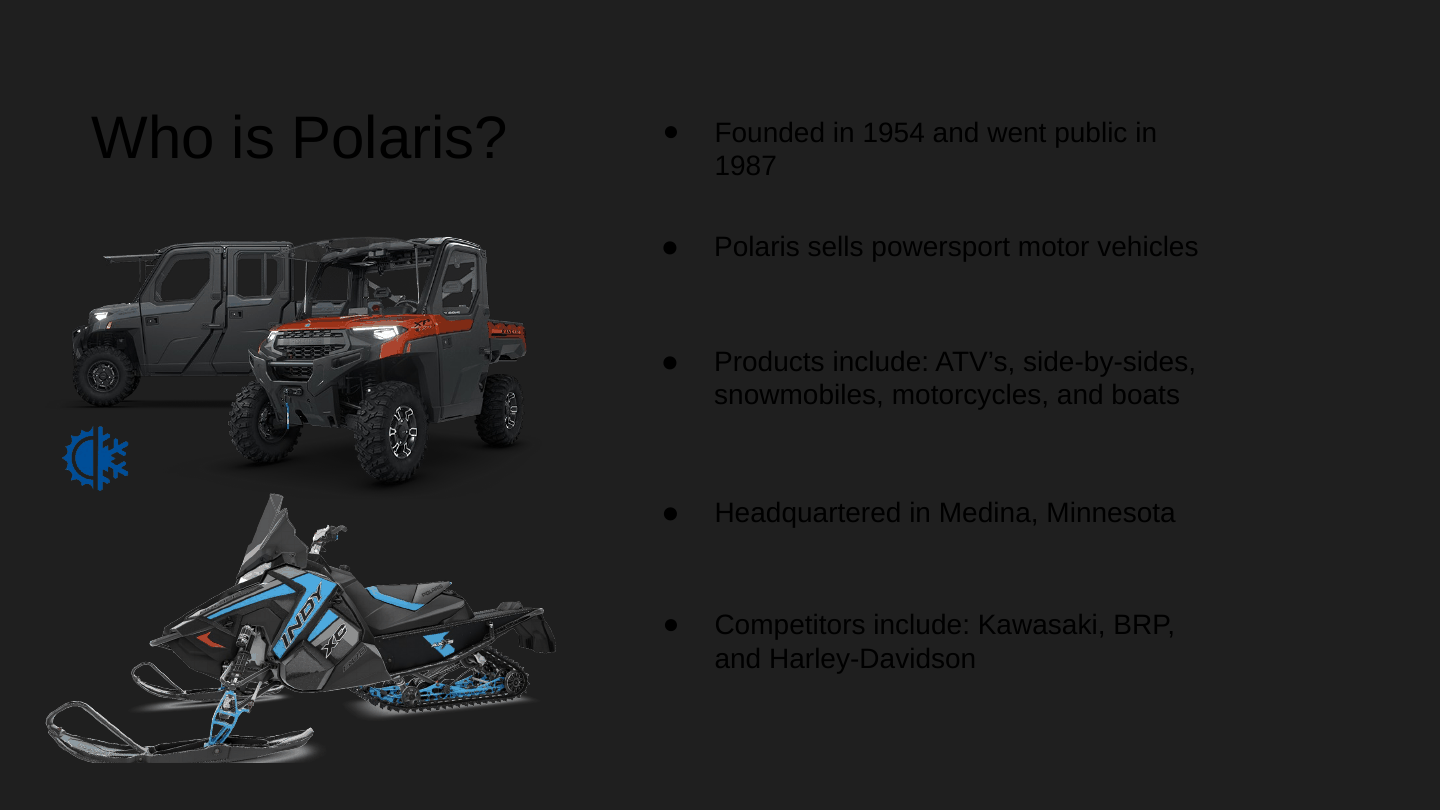
02 Company Overview
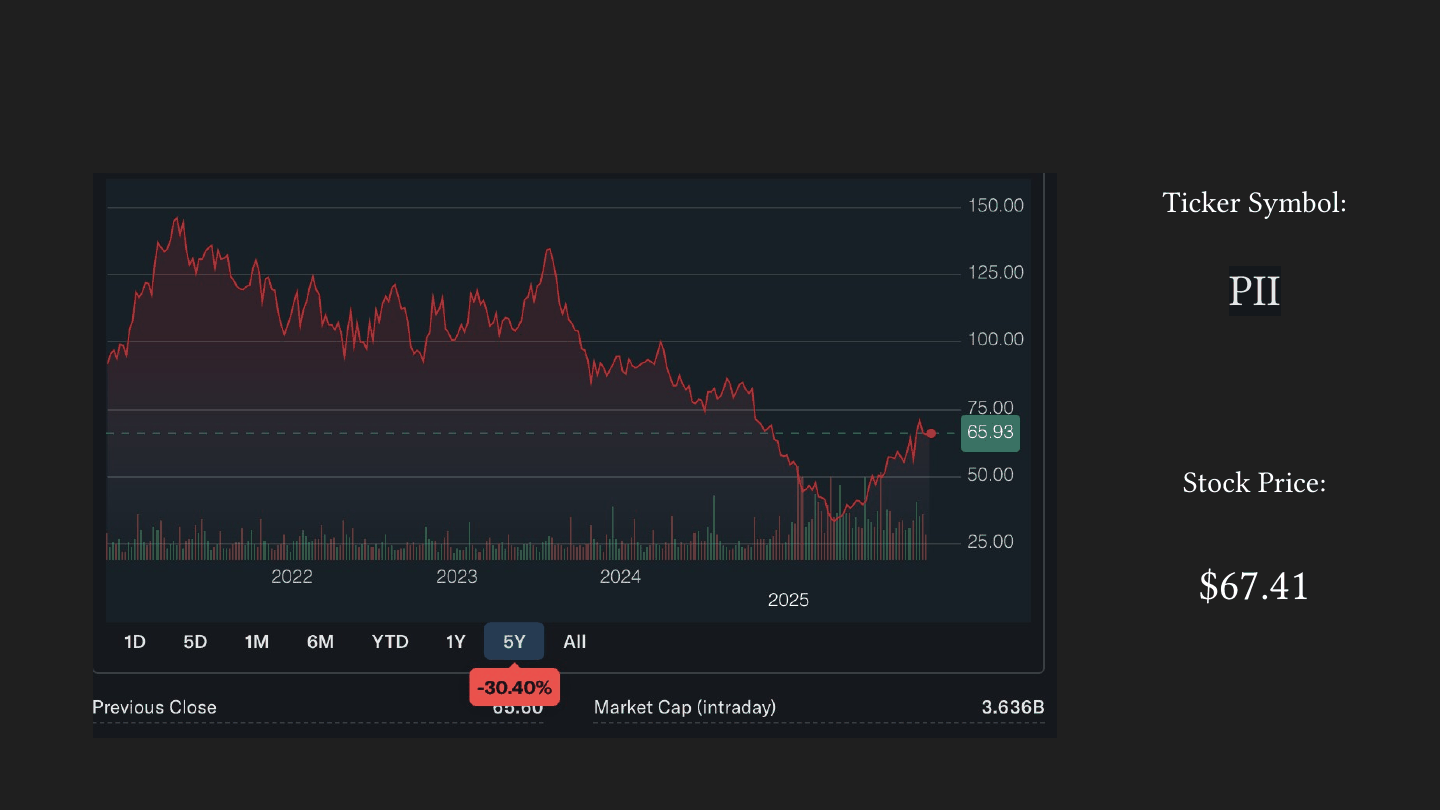
03 Ticker and Market Price
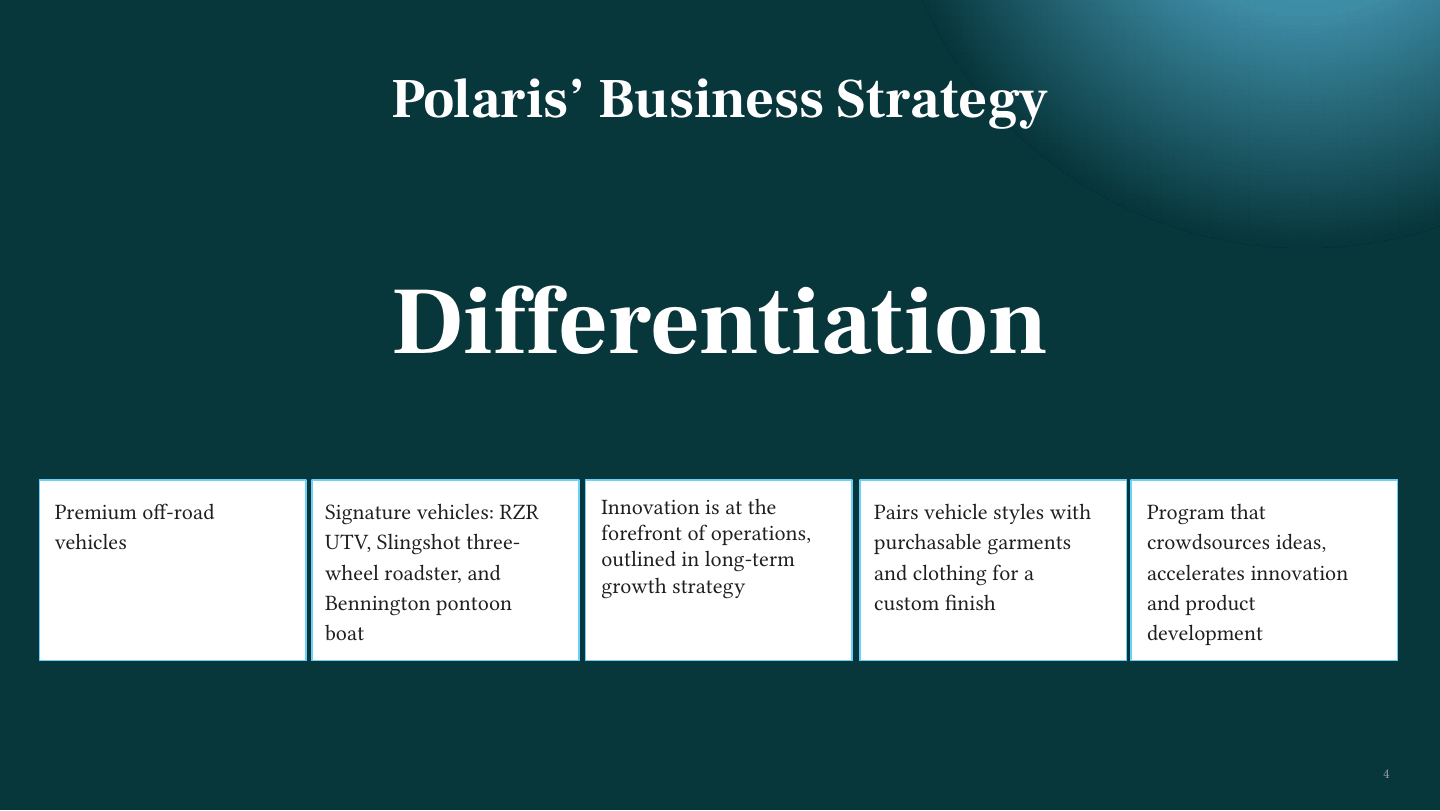
04 Business Strategy
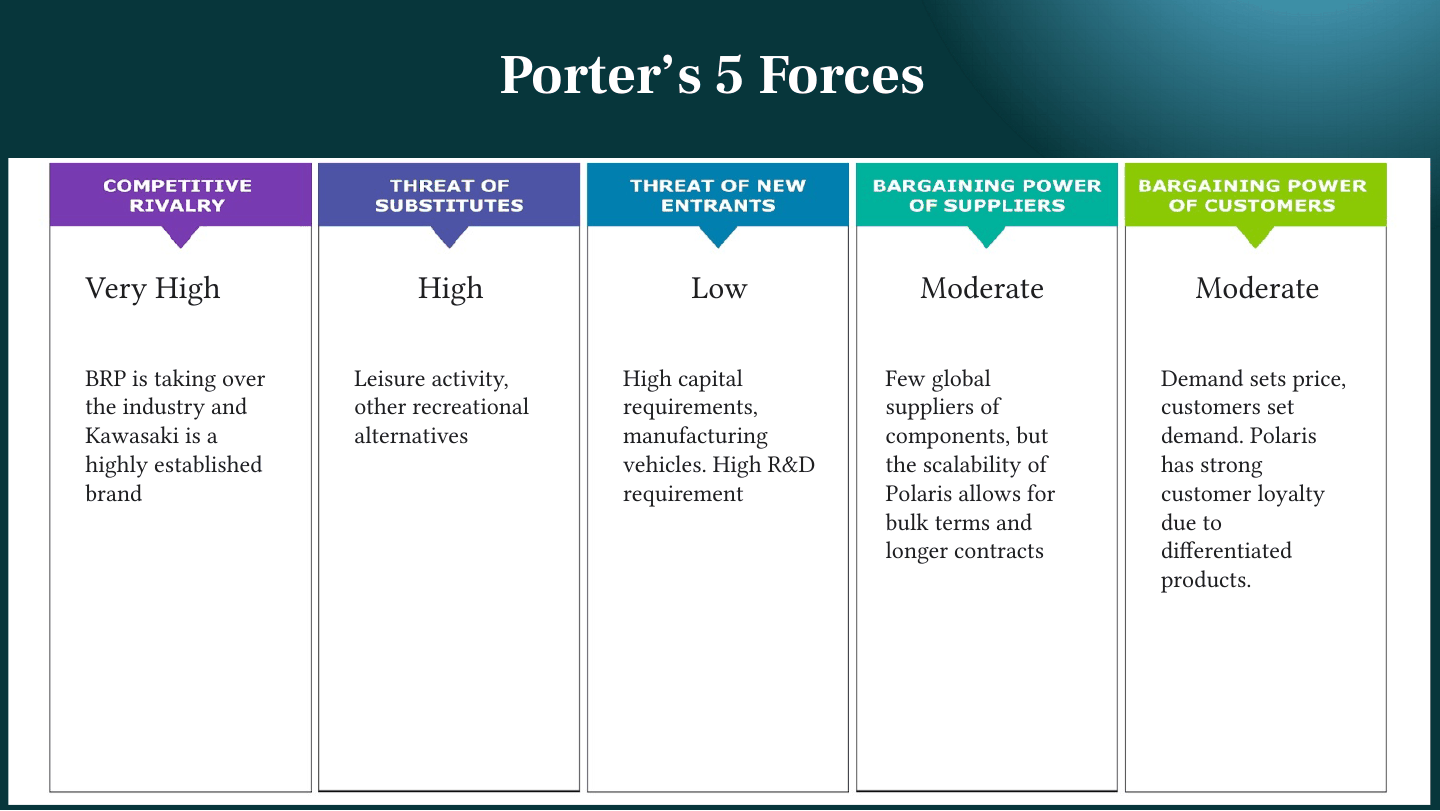
05 Porter’s Five Forces
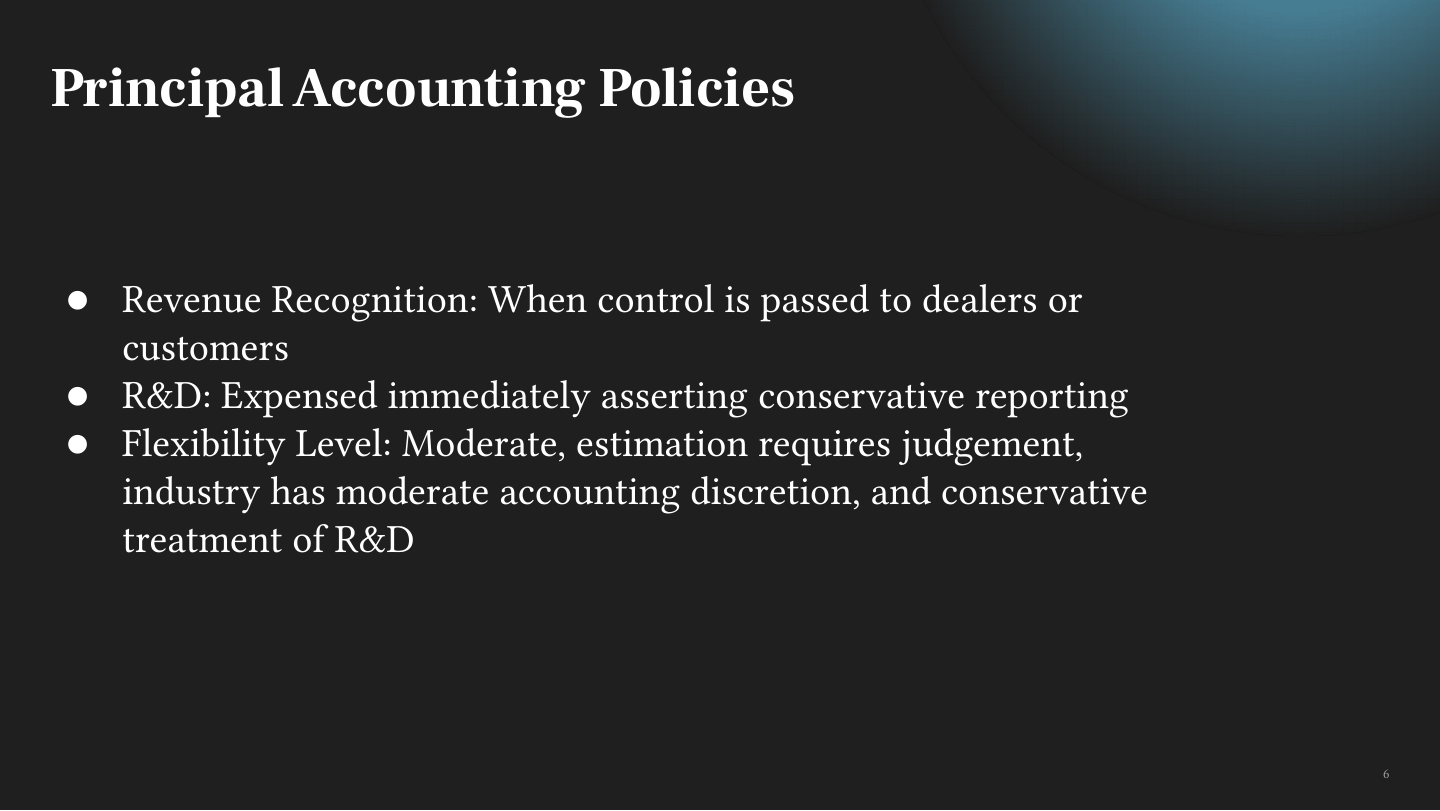
06 Principal Accounting Policies
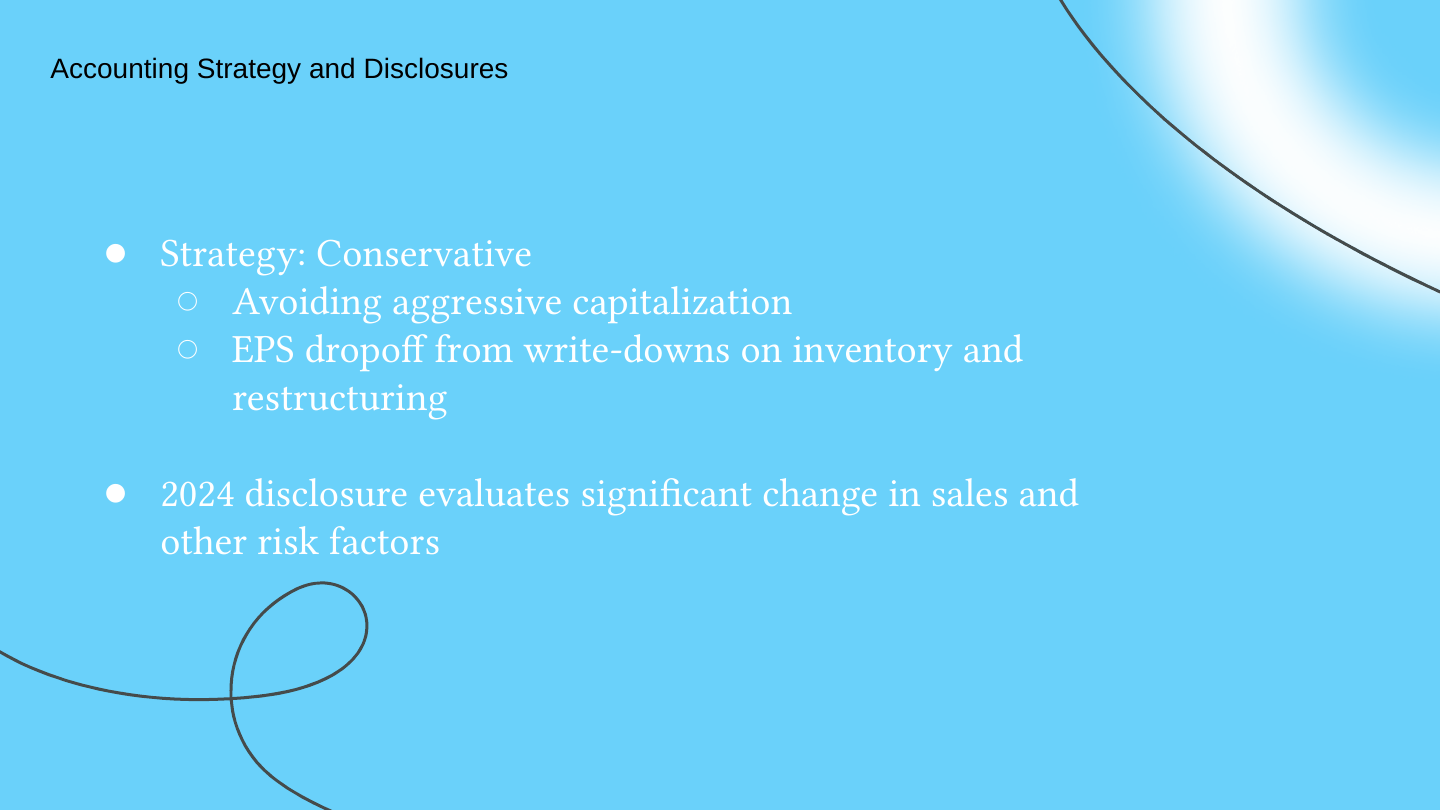
07 Accounting Strategy and Disclosures
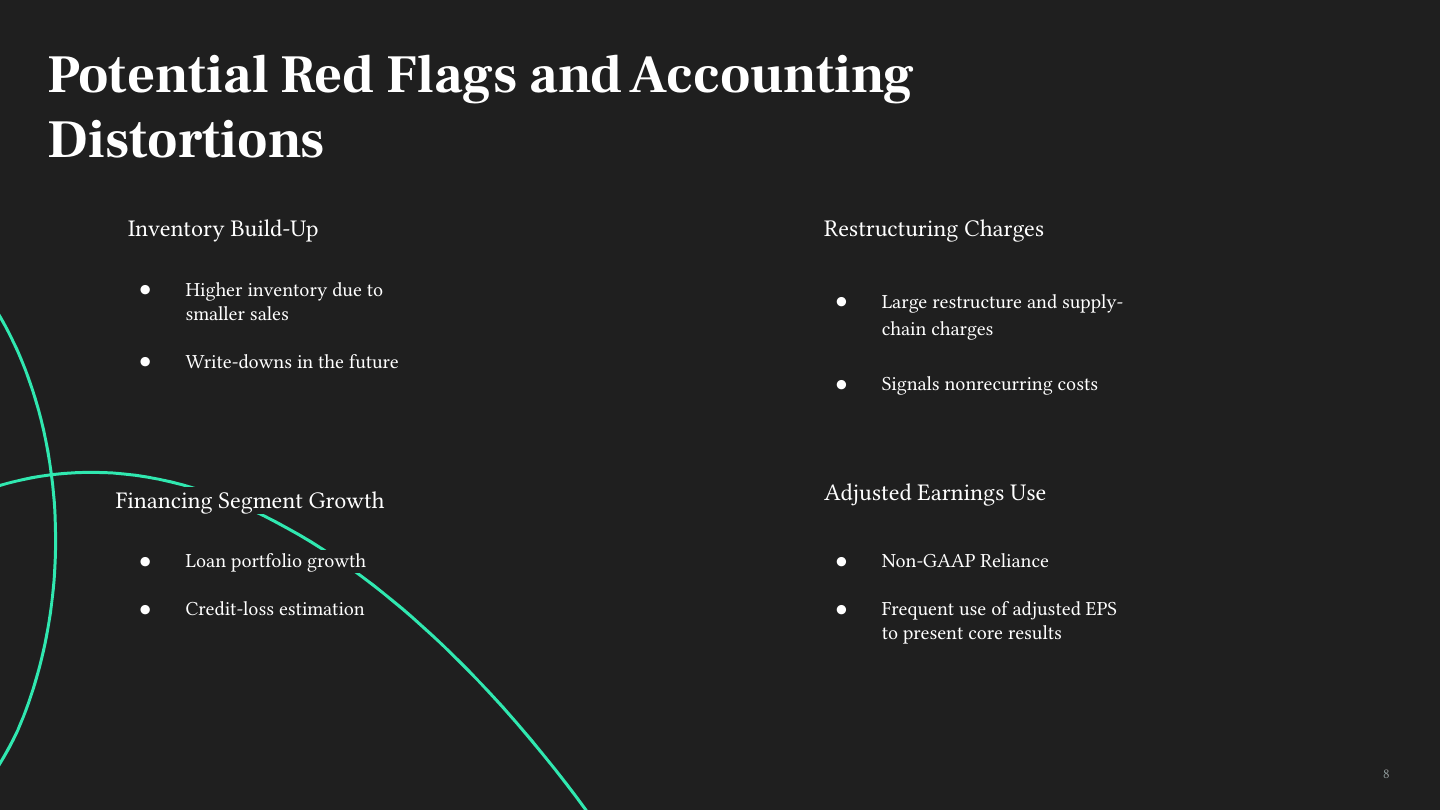
08 Red Flags and Accounting Distortions
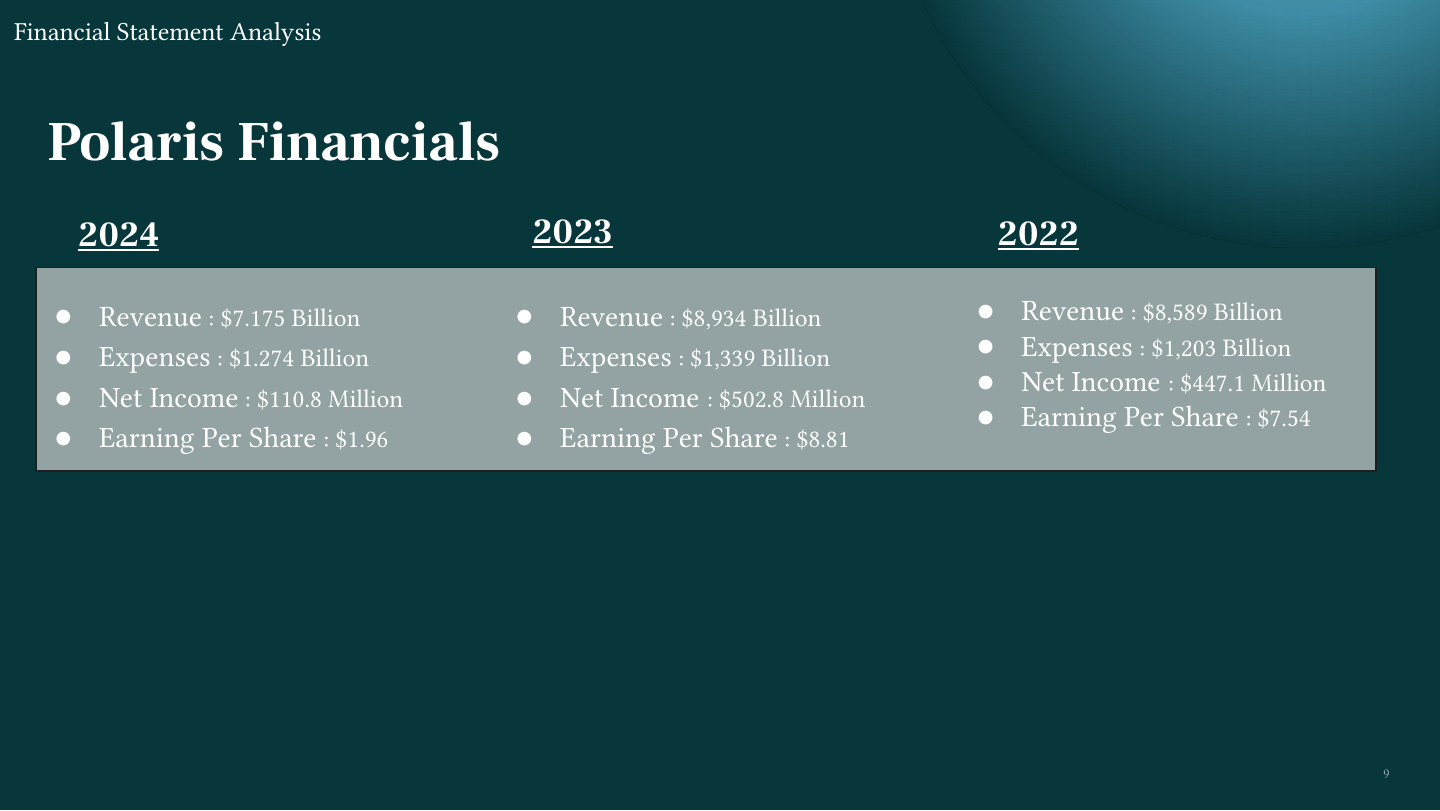
09 Polaris Financials
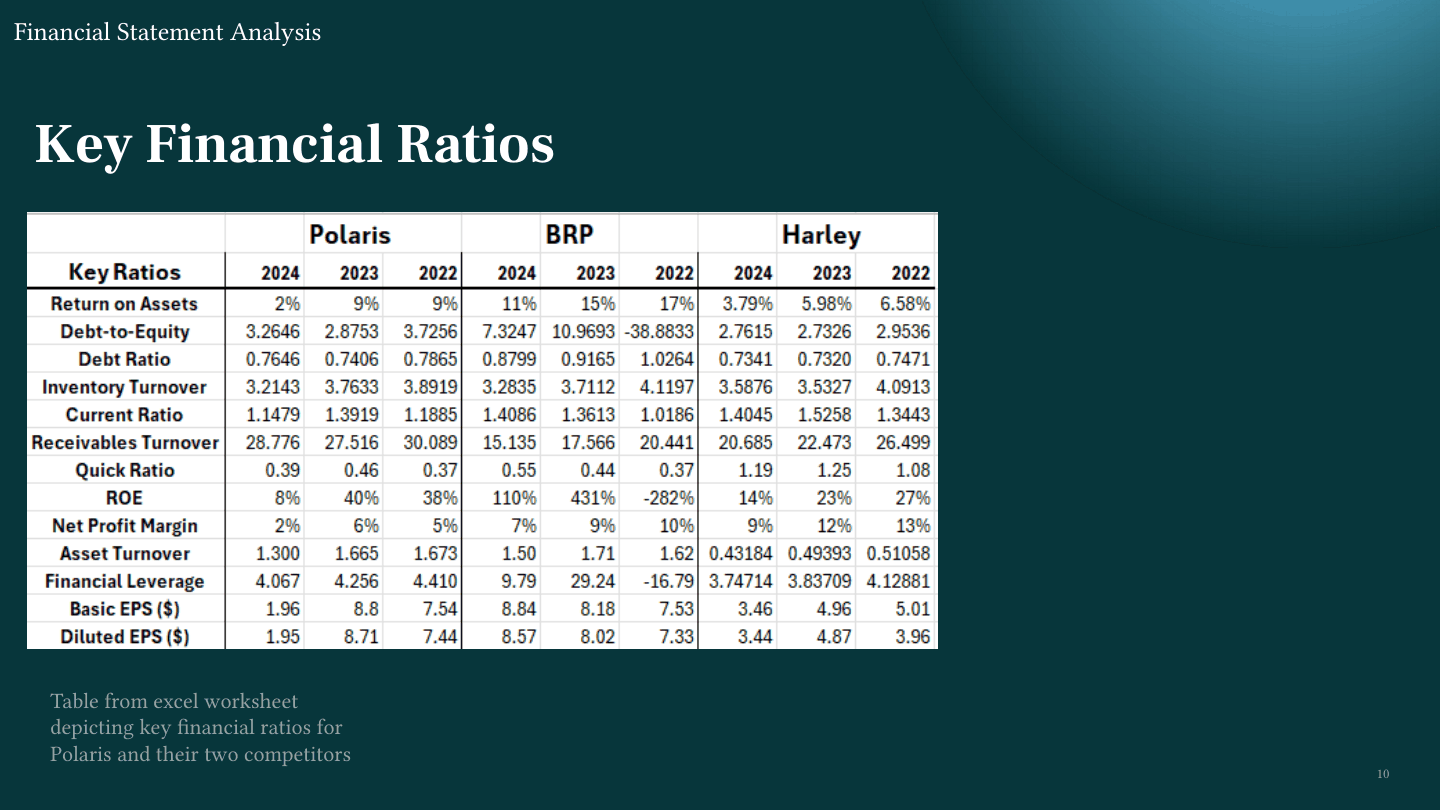
10 Key Financial Ratios
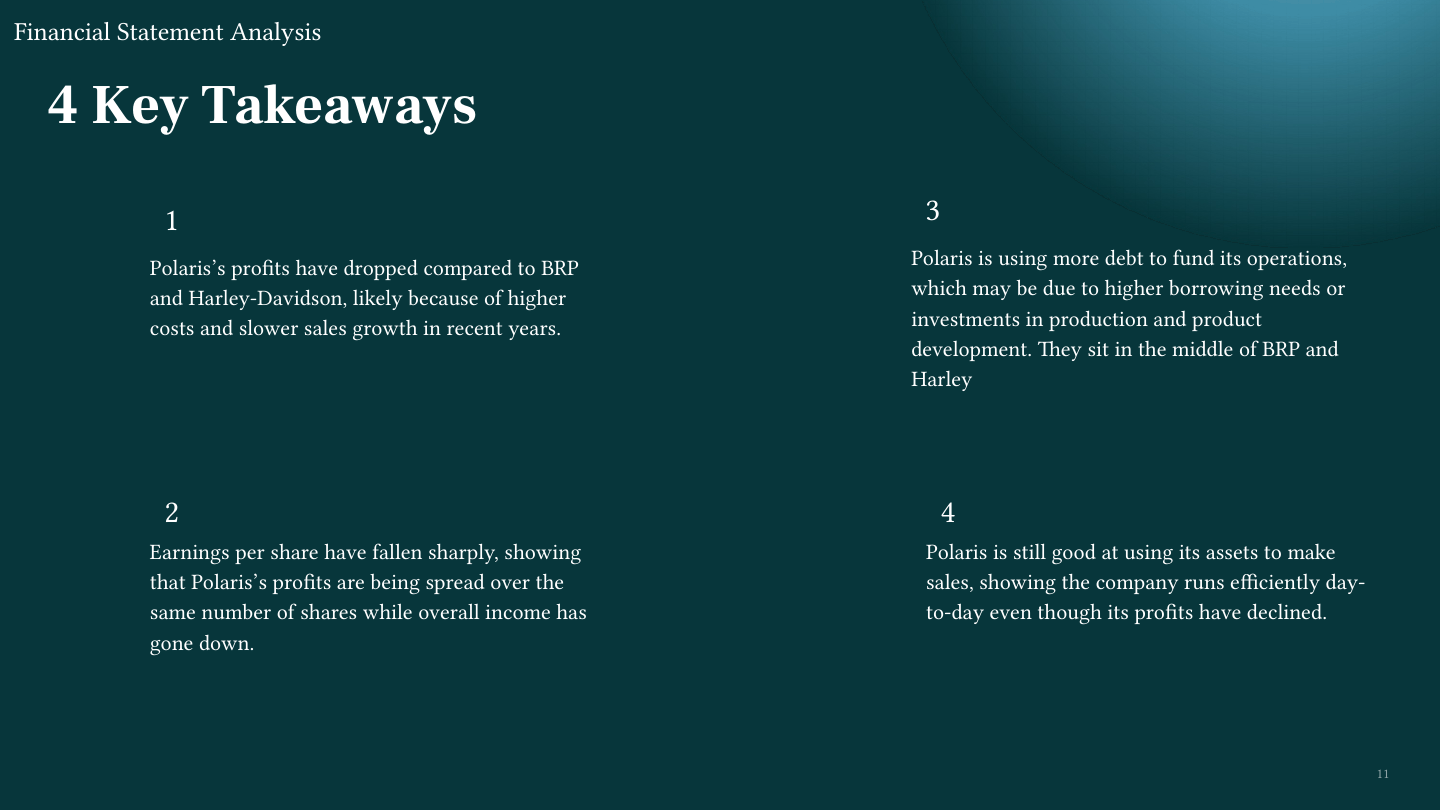
11 Financial Analysis Takeaways
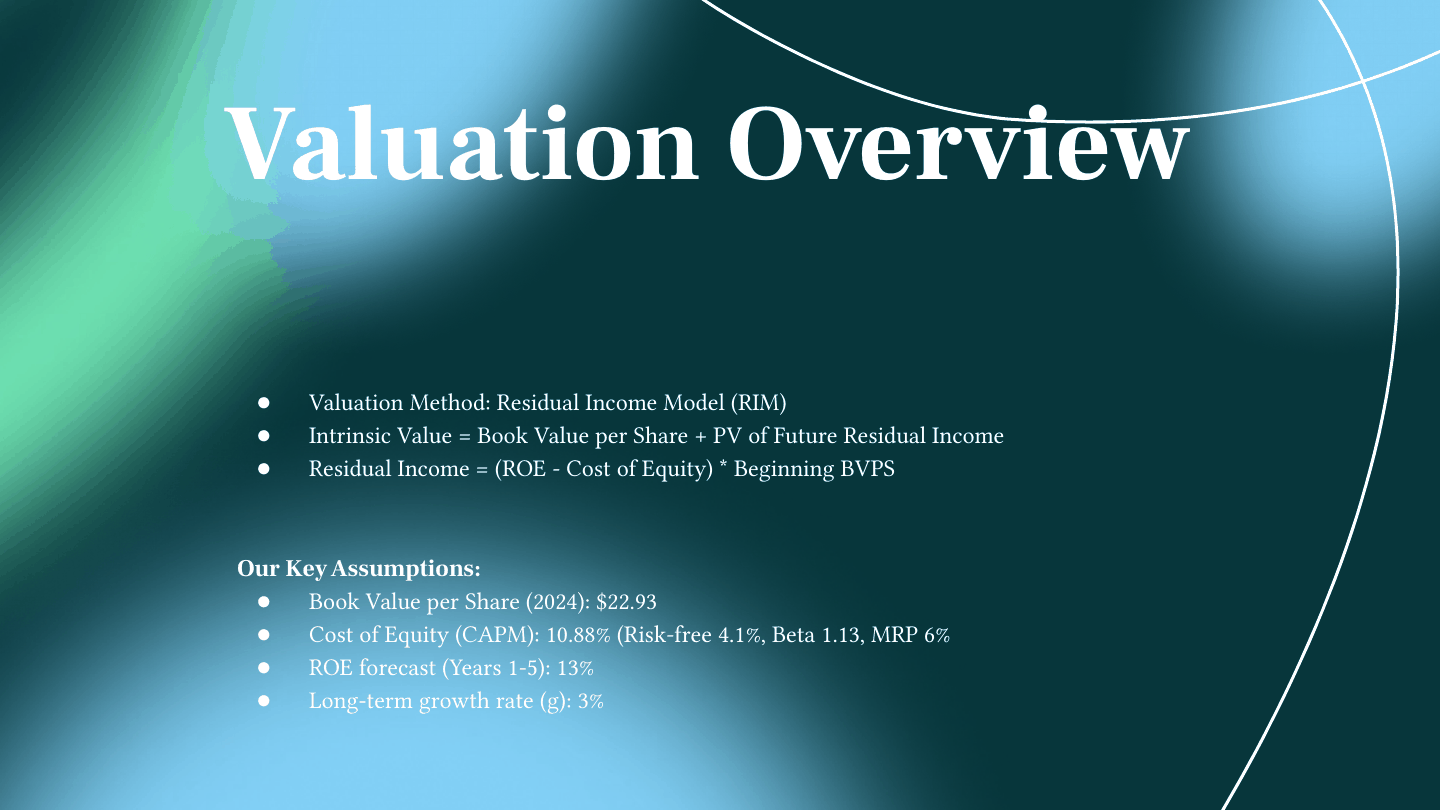
12 Valuation Overview
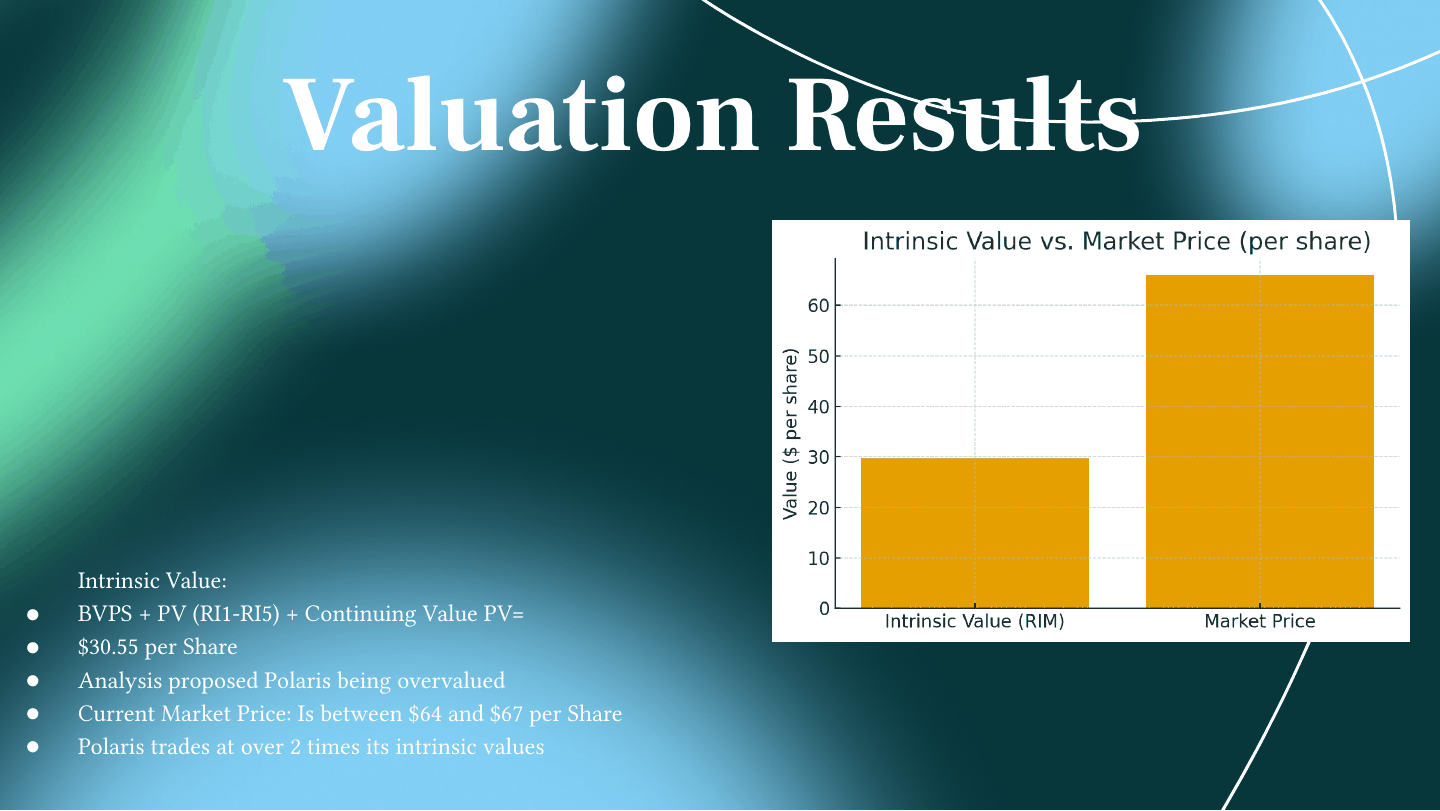
13 Valuation Results

14 Sell Recommendation
Portfolio note
Academic valuation work, presented as a case study.
This page uses the written report to summarize the investment thesis and displays rendered PowerPoint slides as web images. The editable source files are not included for download.